
Rituals with Songs – Meaning, Practice & 20 Real‑World Examples
Rituals with songs turn attention into a kind habit. A single tone gathers the breath; a repeated line creates a friendly arc over the day; shared singing builds community without pressure. This page explains why singing rituals are effective, how to design daily singing that feels natural, and how to honor remembrance with music – with simple steps you can start today.
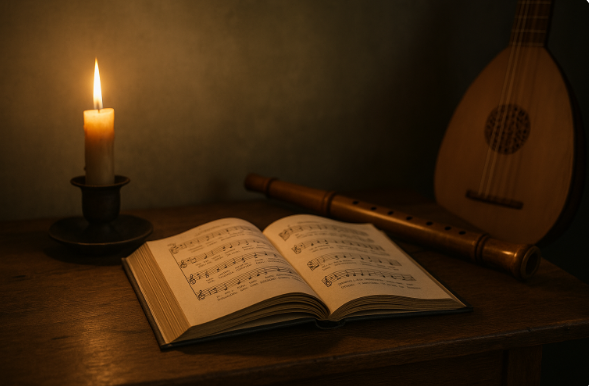
Rituals with Songs: What They Are
Rituals with songs are short, repeatable actions shaped by melody, words, and breath. A ritual offers a form; the song fills that form with sound and meaning. The aim is not performance but resonance: a felt sense of steadiness that returns whenever the song returns. Because the form is small and kind, it can live inside ordinary moments – at the kitchen table, when switching on a lamp, before a call, or after coming home.
Three elements work together: repetition (safety), simplicity (access), and resonance (afterglow). Repetition builds trust; simplicity prevents overload; resonance lets experience settle in the body. A single clear line can sometimes do more than a long playlist: it becomes a familiar doorway you can step through at any time.
Within Echoes of Ancestors, we curate songs to support this approach: steady tempos, grounded ranges, and language that carries meaning without excess. The aim is dignity and clarity – music that feels good without demanding attention.
Rituals with Songs: Why They Work
The body listens before the mind. Rhythm helps regulate the nervous system, and repeated phrasing reduces cognitive load. Singing engages breath and posture; a shared inhale and an unhurried tone can downshift the internal pace. When we sing with others, social resonance adds another layer: we align, we hear one another, we belong for a few minutes. That is often enough to cross a threshold – into morning, into rest, into focus.
There is also a memory aspect. Songs carry images and links to lived moments; repetition reinforces those pathways. In remembrance and grief, this matters deeply. A song can hold what we cannot say, or say with few words what would otherwise be heavy. In family life it may become an anchor: the same opening line at bedtime, the same refrain before meals, the same tone when someone returns home.
Daily Singing Rituals: Start Small and Honest
Daily singing is not about discipline; it is about making a friendly place for the voice to return. Choose a moment that already exists – waking up, boiling water, turning off the lights. Use a short motif or the first line of a song. Keep the pace slow and the volume low. Hold the shape for two weeks without judging. Later, adjust one variable: the moment, the place, or the melody. The change should be small enough that the ritual remains familiar.
- Morning tone: one breath, one tone, one line – attention gathers.
- Threshold tone: before you open a door or begin a task, hum two bars.
- Evening release: repeat a gentle motif, let the shoulders drop.
- Weekly anchor: choose one song for a specific day; repeat it as is.
20 Real‑World Examples of Rituals with Songs
- Wake‑up gathering: hum a low tone and sing the opening line once.
- Kettle pause: while water heats, sing a brief refrain; no rush.
- Doorway focus: two bars before you leave; set your attention.
- Midday reset: one refrain marks the shift from work to meal.
- Before a call: inhale, pitch the starting note, sing one line softly.
- Homecoming: the same motif at the threshold; you arrive together.
- Evening slowdown: an unhurried line; the internal tempo drops.
- Weekly remembrance: one song on the same day; memory keeps.
- Circle singing: simple range, quiet pace, repetition instead of build‑up.
- Feast & grace: a clear melody frames the meal without preaching.
- Farewell & mourning: dignified lines hold the moment gently.
- Gratitude note: one verse after writing a thank‑you card.
- Walking meter: match the tempo to your steps; steady the breath.
- Care routine: for washing or tending; a short line repeats.
- Study entry: tone + line to begin; the mind knows the path.
- Parent–child anchor: a tiny call‑and‑response before bedtime.
- Community welcome: start gatherings with one verse together.
- Anniversary lighting: a candle and refrain for remembrance.
- Travel blessing: hum before departure; sing on return.
- Personal pledge: one line you keep for yourself; whisper it.
Design Principles for Singing Rituals
Good rituals are light, clear, and repeatable. They should not require preparation or gear beyond your voice. The melody belongs to a comfortable range, the tempo is steady, and the words are clean enough to carry meaning without strain. In groups, pitch lower than you think, give gentle entries, and favor two extra repetitions over any dramatic rise. Remember: the goal is resonance, not volume.
- Keep it brief: 60–180 seconds is enough for most contexts.
- Choose one image: an image that fits your life makes a line memorable.
- Stay repetitive: repetition builds steadiness; ornamentation can wait.
- Protect the quiet: a moment of silence before or after helps the song settle.
Songs for Remembrance
Songs for remembrance help hold what cannot be said directly. They may accompany anniversaries, family gatherings, or quiet moments at home. The tone should be dignified rather than dramatic. Light a candle, choose one line, and let silence do part of the work. If the memory is tender, keep the melody narrow and the tempo slow. The aim is to stay with what is present, not to manage it away.
- Use a single verse or refrain rather than a long form.
- Invite others to join only if they wish; some will prefer listening.
- Let the last note fade fully before you move.
Children and Families
Children respond well to repetition and gesture. Choose very short lines, add a simple hand movement, and keep the key warm and low. A recurring evening song can become a reliable doorway to rest. Morning call‑and‑response can make getting dressed less dramatic. Avoid bribes or performance cues; let the song be an anchor, not a test.
- Two lines are plenty; repeat rather than extend.
- Add a consistent gesture to mark the moment.
- Keep recording devices away; presence matters more than capture.
Common Mistakes (and Gentle Fixes)
- Too ambitious: starting with a whole song → reduce to one line.
- Too loud: trying to fill the room → lower the key; favor resonance.
- Too rare: long sessions twice a month → two minutes daily is better.
- Too complex: harmony before habit → build the habit, then expand.
Accessibility and Care
Rituals with songs should welcome different bodies and voices. Offer seated versions, keep lyrics readable, and avoid assumptions about range or training. In mixed groups, demonstrate with care and explain the shape in one sentence. If someone prefers not to sing, invite humming or simply listening. The ritual includes them either way.
Recording or Not?
Phones are helpful for learning but can pull us out of presence. If you record, do it once to recall the melody and then set the device aside. During a ritual, let attention rest with breath and sound. For remembrance, recordings might be precious later; still, sing first, record second.
Choosing Songs from Echoes of Ancestors
The collection is built for calm practice. Each song page includes lyrics, a short context, and suggestions for singing rituals and daily singing. Start with a song whose image speaks clearly to your life. If a line resonates on first reading, try it as your daily anchor for two weeks. Keep it as is; do not optimize too early.
- Explore the Songbook – a growing, print‑friendly PDF.
- Browse all Songs – each page with lyrics, context, and practice tips.
- About Us – vision, guiding star, and the seven principles.
Further Reading (External)
Frequently Asked Questions
What are rituals with songs?
Rituals with songs are small, repeatable forms deepened by melody and breath. They bring steadiness to ordinary moments and can be practiced alone, with family, or in groups. You can start with one line and a clear breath. That is enough.
Why do singing rituals work?
Singing rituals align breath, voice, and attention. Rhythm regulates the nervous system; repetition reduces decision fatigue; melody carries meaning. In community, a sense of belonging strengthens the effect. The goal is not performance but resonance.
How long should a practice be?
One to three minutes is usually enough. The key is consistency. Two minutes every day does more than thirty minutes once a month. Keep it small and honest.
Do I need any musical training?
No, you do not. The collection is designed for ease of singing. Choose a simple range, a slow pace, and repeat the same line for a while. If you like, add a soft drone or acoustic instrument later.
Are these religious songs?
The tone is dignified and open rather than doctrinal. You can use the songs in secular settings, interfaith gatherings, and family moments alike. The focus is clarity, kindness, and care.
How do I keep a ritual alive?
Tie it to an existing habit (boiling water, turning off a lamp). Keep the shape constant for two weeks. If motivation dips, make it even smaller: one breath and a hum counts. Let the ritual serve you, not the other way around.
Can children join?
Yes. Use short lines and gestures. Children thrive on repetition and will often lead the way once the pattern is familiar. Avoid turning the moment into a performance; let playfulness stay gentle.
What about remembrance?
Songs for remembrance can carry tenderness and grief with care. Keep the melody narrow, the tempo slow, and the language simple. A candle and one verse may be all that is needed.
Next Steps
- Explore the Songbook – print‑friendly and growing.
- Browse all Songs – with lyrics, translation, and practice notes.
- Learn about the project – vision and the seven guiding principles.